

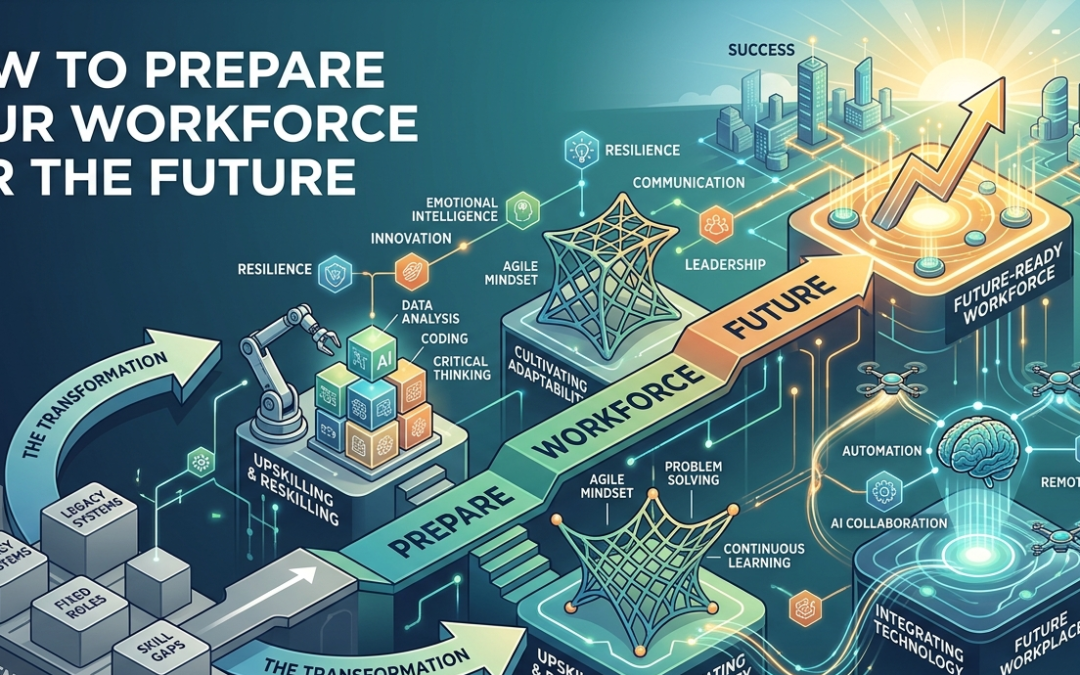
A future-ready workforce is built, not hired overnight. Here is the approach our certified consultants use with clients across semiconductor, aerospace, and cleantech sectors.
1. Build AI Literacy and AI Fluency Across Every Team
Start with a shared baseline. Everyone, from finance to frontline engineers, needs basic AI literacy, prompt engineering training, and governance and ethics training. This reduces fear and builds digital confidence. If you are hiring while building capability, our AI/ML talent acquisition work supports that shift with roles built for real implementation.
2. Redesign Jobs and Roles with AI in Mind
Workflow transformation is where real productivity gains live. Map tasks that AI agents can automate. Then redesign roles so humans focus on judgment, creativity, and client work. This is business process redesign, not layoffs. It also aligns with our work in engineering talent excellence for teams that need technical depth without slowing delivery.
3. Launch Personalized Learning Pathways
Static training fails. Personalized learning pathways, microlearning, and just-in-time learning embedded in daily tools work far better. Link each pathway to clear career mobility and internal mobility goals.
4. Strengthen Change Management and Cultural Readiness
Change management is the single biggest predictor of successful AI adoption. Identify AI champions and digital mentors inside each department. Reward experimentation. Celebrate small wins publicly. For leaders planning broader transformation, our workforce transformation services connect organizational redesign with next-gen competency development.
5. Close the Skills Gaps with Targeted Talent Acquisition
Sometimes upskilling is not enough. You need specialized talent, fast. That is where our AI-driven talent acquisition, strategic workforce planning, and workforce transformation services step in to deliver a strong technical and cultural fit. If your roadmap includes emerging systems, our next-gen hardware specialists team also supports advanced hiring needs.
Common AI Readiness Mistakes to Avoid
- Treating AI as an IT project instead of an enterprise AI strategy.
- Ignoring data readiness and rushing to generative AI use cases.
- Skipping responsible AI principles and AI governance framework.
- Training leaders but not frontline teams on AI fluency.
- Running pilots without a clear AI roadmap or ROI visibility.
Your Future-Ready Workforce Starts With the Right Partner
The age of generative AI is not slowing down. Sovereign AI, physical AI, and agentic AI are already reshaping the future of work.
With 14+ years of specialized expertise in engineering and AI hiring, Providence Partners helps you move from a readiness gap to a real competitive advantage.
Our complete AI readiness assessment, workforce analytics, and capability building programs give you a clear AI readiness roadmap, a measurable business case, and the elite talent to execute it. If you want a direct next step, reach out here and let us help your team operate at peak performance in an AI-first world.
Frequently Asked Questions
1. What is included in an AI readiness assessment?
A strong assessment reviews strategy, data, infrastructure, governance, talent, and culture. You receive a readiness score, a prioritized roadmap, and clear next steps to close the gaps.
2. How long does an AI readiness audit take?
Most engagements run four to six weeks. This includes stakeholder interviews, data evaluation, workforce AI readiness mapping, and a final AI readiness report with recommendations.
3. Why is workforce readiness more important than tools?
Tools without an AI-enabled workforce create expensive shelfware. People drive adoption, trust, and workflow redesign, which is where real productivity gains come from.
4. What is the difference between upskilling and reskilling for AI?
Upskilling improves existing skills for current roles. Reskilling prepares employees for new roles created by AI-driven transformation. Both are essential for a future-ready workforce.5. How often should we repeat an AI readiness assessment?
We recommend every 9 to 12 months. AI maturity stages shift quickly, and a fresh AI readiness audit keeps your AI strategy, governance, and workforce plan aligned with current reality.